Thoughts on the Cailleach, hibernation and waking up to spring
We are already more than halfway through the first month of 2026, and I want to wish you a year of tender new beginnings, a year of softer, brighter days, a year of gentle, good news to come, a year of happiness and hope.

After a difficult September with Carys becoming ill, I gave myself the heel of last year off. I entered into that hibernation mode we are supposed to naturally slide into in winter, and was content just to hang out with my family. I was reminded how much we take health, and life, for granted, that we never fully appreciate what we have until it’s gone, and I needed time to ponder that.
We hadn’t been allowed to take Carys out of the hospital because if her condition worsened, we were told, it was unlikely she’d survive the journey from our home back to the hospital. A 30 minute trip. Coming that close to losing her again, after all these years of relative stability, shocked me to my core. So I gave everything up, including my space here, to be around my kids.
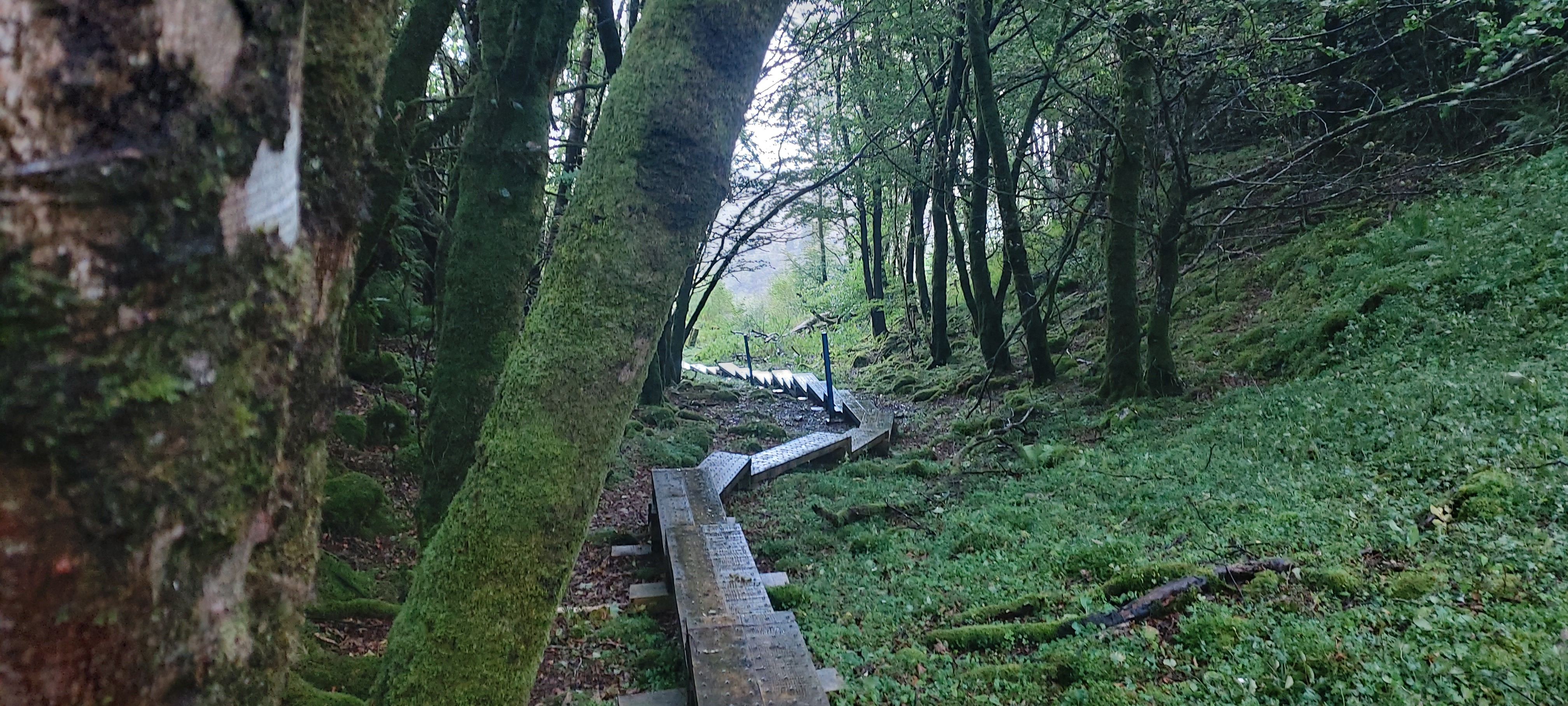
But you can’t hibernate forever. The newly birthed wild plants are already pushing their way up in the hedgerows, the hazel katkins are in full bloom, and my body is starting to feel restless. My mind is sorting seed packets and planting adjacancies, much against my will, and I have already ordered, and received, a first tender assortment of new plants for my wild garden.
I’m thinking forestry and ferns, shady plants and damp, dark corners, stumpery and moss and fungi and decay. Just when she should be dozing, the cailleach in me is rising. I seem to be somewhat out of sync with the natural order, but then so are the seasons, and humankind in general, so perhaps in a time of environmental chaos, it is only to be expected.

This past week, the cailleach has come to me three times in unexpected ways. Unravelling her mystique, and the veiled lessons that reside within her archetype has been a fascinating undertaking. For now though, I just want to highlight one of those events, because to me, it succinctly distils everything I had come to think about the cailleach and what she represents.
Recently, while researching seventeenth century Ireland for a novel I’m writing, I came across this:
According to the contemporary English author Thomas Churchyard, ‘the men of war could not be maintained, without their churls, and calliackes [cailleach], or women, who milked their creates [herds of cattle], and provided their victuals, and other necessaries. So that the killing of them by the sword, was the way to kill the men of war by famine.1
What we can see from this is that Irish men did not despise their old women. In fact, they brought them to war with them. These old women performed vital duties that the men could not manage themselves when marching from battle to battle, or during fighting. These old women tended their cattle, cooked their food, probably washed their clothes and took care of their possessions. Maybe they were mothers and grandmothers, maybe they were poor women, or widows who undertook this work out of neccessity.
But they had power. They kept the wheels of war churning. They maintained the health and strength and wellbeing of their Irish warriors. The English military quickly realised this; they knew how much their Irish enemies depended on the support of these old women. So they went for them. To kill the men, they had first to kill the women. They brutally butchered them to death by sword, even though they were old and defenceless.
And it wasn’t just a one-off event. Sir Humphrey Gilbert, who was Sir Walter Raleigh’s half-brother, conducted some vicious military campaigns in Munster that ‘became a byword for brutality and cruelty’, and he was particularly ‘renowned for his harsh treatment of old women’.2
Why am I telling you this?
Because it came as a surprise to me to see it highlighted in a context I hadn’t expected or imagined. But it shouldn’t have done. The early modern period is synonymous with the Enlightenment, and if you have read any of my earlier posts on the subjugation of the cailleach as an archetype and as a symbol of later-life real women, or if you have ever read any of Sylvia Federicci’s work, you will know this movement began with the appropriation of land and land enclosure, which of course, is exactly what the English were doing in Ireland at that time.

And if you have read The Book of the Cailleach: Stories of the Wise-Woman Healer by Gearóid Ó Crualaoich, you will also know that older women in Ireland were respected, and perhaps also a little feared, as the mortal incarnation of the cailleach, well into the nineteenth and early twentieth centuries.
In that one short quote we can see both these aspects of the cailleach collide in the flesh, so to speak. I really wanted to share that with you. The cailleach may go to her rest in the spring and summer, she may have slipped from our consciousness over the centuries, but she is still relevant. I would love to see her revival, in the way that the spirit of Brigid has been reawakened in recent years. As archetypes that work together in myth and nature, it would be a sensible and natural evolution.
Grá mór,

O’Neill, J. (2021) ‘Spouses, spies and subterfuge: the role and experience of women during the Nine Years War (1593-1603)’, Proceedings of The Royal Irish Academy: Archaeology, Culture, History, Literature, 121C, pp. 1-24. doi: 10.3318/PRIAC.2021.121.02.
Inid.


Hey… let's talk!