How sleep and the dream state can affect your memory
I forget people’s names the moment I am told them. I go up the stairs or into a room and forget why I am there. I go shopping and forget what I need to buy. If I don’t make a list of all the things I need to do in a day, none of them will get done. I even forget my own language.
Example: Wednesday this week, the day of the Russian earthquake. When my son gets home from work, I ask him, “Did you hear about the earthquake and the tsunammis?” He replies that he did, and I go on to say, “Did you know the earthquake also triggered a volcanic eruption?” Except in those few seconds between both questions I have somehow managed to forget the word ‘earthquake’, even having just said it in my first question. I know there is a word for it, I know that I know the word, I can almost taste the shape of it in my mouth. But the word seems to have somehow slid from my memory into that great void where all my other forgotten words are whirling.
It’s a common symptom of perimenopause. But it makes me feel like I’m going mad. Or approaching the onset of dementia. My husband always jokes that I am so forgetful already that no one will notice when I get dementia. I laugh, but it doesn’t feel funny anymore. It’s strange but true how you only notice the value of something when you lose it. My mind was always busy tidying away my thoughts like Marie Kondo, tossing out bits of knowledge it felt were irrelevant and no longer served me. I never used to worry about my poor memory, but now I am obsessed with it.
I was a daydreamer as a child. I would look out the window at school and drift off somewhere else. Not that there was anything wrong with the real world I found myself in. It was just that the dreamworld entranced me and was always calling me in. If people ever say things to you like, “penny for your thoughts”, or “you’re absent-minded”, or “give us a smile”, or “pay attention”, or “earth to [your name]”, then you were/ are probably a daydreamer too, in which case, nice to meet you!
I dreamed at night, too. Nightdreaming could be quite spectacular. Once, when I was about fourteen, I dreamed a whole poem, and when I woke up, I remembered it word for word and wrote it down immediately. I still love that poem. But often, my nightdreams were composed of a series of scenes that on waking I could not make sense of.
As an adult, I have also had some terrifying death dreams, which were so vivid in their detail and clarity that they stayed with me, just as sharp as I dreamed them. I take them as a warning. They were too real and un-dreamlike, if that is a word, for me to ignore. But as I have got older, I seem to have stopped dreaming.
If I mention this, people will tell me, of course I dream, it’s just that I don’t remember them. But I know the elusive quality of fading dreams, and what I have is not that. What I have is the emptiness of not dreaming.

What is a dream?
For most people, a dream is something they observe, or are a part of, when they are asleep, but which is out of their control. The scientific study of dreams is called oneirology (isn’t there an ‘ology’ for everything?). According to The Sleep Foundation, dreams are composed of “mental, emotional, or sensory experiences that take place during sleep”.1 Why we dream is less clear. Current theories suggest dreaming aids with memory-building, mental ‘housekeeping’, processing emotions, and analysing recent experiences.
Sometimes, a dreamer can become aware that they are dreaming, and in this state may be able to exert some level of agency over the events of their dream. This is called lucid dreaming, and is considered by oneirologists to be a learnable skill.2 Researchers think it is possible that lucid dreaming may help improve mental health, wellbeing, or even prevent nightmares.
Dream incubation is another dream phenomenon. It’s a type of manifestation, if you like, in which the prospective dreamer meditates on a particular topic, for example a problem they wish to resolve, as they prepare for sleep. They hope the answer will be revealed to them in a dream.3
The history of dreaming
In ancient times, dreams were often seen as a way of communicating with the Gods or the ancestors (who were, perhaps, one and the same). Dreams were thought to be liminal spaces in which important messages containing predictions, revelations, or advice could be accessed.
The early Egyptians built special temples where they could recline in a dream-bed, awaiting the arrival of their Gods while they slept, whom they hoped would share wisdoms concerning healing, advice, success in love, or warnings of danger. 4
Similarly, the Greeks also believed in dream incubation, but they took it a stage further. They were said to have carried out rituals of sacrifice and gift-giving in order to please their Gods, and abstained from sex, eating flesh and drinking wine in order to purify themselves in readiness to receive their dreams.5
The early Christians associated dreams with divine inspiration. The Bible recounts many occasions when God passed on messages and instructions via dreams. It was only in Medieval times that dreams began to be seen as the work of the devil.6 As time went on, people began to lose their faith in the power of dreams, and they became merely a source of entertainment.

Dreams in Irish myth
In Irish mythology, Óengus Óg of the Tuatha de Danann had a dream which very nearly took his life. Over the course of a year, the same dream came to him night after night, in which he was visited by a beautiful young woman who played the harp for him before disappearing.
He fell so deeply in love with her that he refused to eat or take part in the every day activities of normal living. He longed only for the night and the arrival of his mysterious dream maiden. So the life in him, which had been strong and bright and vital, began to fade. He was dying. Do you think it is possible for a dream to have such an effect?
The girl’s name was Caer Ibormeith (means ‘yewberry’), and she was the daughter of a Connacht Sidhe chieftain. She had fallen in love with Óengus from afar, and saw no other way for them to be together. But how do you make someone dream about you?And how could they be in the same dream at the same time?
Their dream has the hallmarks of lucid dreaming. Caer Ibormeith stood beside Óengus’s bed. When he reached out for her, she disappeared. Did she wake herself up, thus dissolving in Óengus’s grasp? Were they sharing a lucid dream experience? This story raises more questions than answers.
In Irish myth, dreams were often used as a means of seeking knowledge, and some of the practises used to prepare for these dreams appear to be rituals that induce incubation.
For example, Imbas Forosnai is an ancient Irish ritual for looking into the future and seeking information through dreams. Imbas means ‘inspiration’, in particular the sacred poetic inspiration of the ancient Filidh, and forosnai means ‘illuminating’ or ‘that which illuminates’. According to the Sanas Chormaic (Cormac’s Glossary), an ancient text dating to the tenth century, it involved the use of sensory deprivation and the consumption of specific substances in order to pass into a trance or dream state.
The Tarbfheis, or bull feast, was a ceremony used to select the next High King. It involved the sacrifice of a white bull, after which the Druid, or poet, would ‘chew the flesh and drink the broth’. I’m assuming the meat was cooked, since broth was a component of the ceremony, however, the Imbas Forosnai was said to require the chewing of ‘red flesh’ ie raw, so perhaps it was required of the Tarbfheis too. Although the term could also refer to Amanita muscaria, the halucinogenic red-capped toadstool. Following his ritual meal, the poet was wrapped in the bull’s raw hide to dream. If his dream was unsuccessful in identifying the new King, he faced death.
This ritual takes place in the myth-story, Togail Bruidne Dá Derga, ‘The Destruction of Da Derga’s Hostel’. Wrapped in his bull-hide, the poet dreamed the future King would arrive in Tara naked and surrounded by birds.
Young Conaire Mór happened to be out hunting birds that day, when the leader of the flock suddenly threw off his feathers and revealed himself as the King of Birds, and Conaire’s true father. He advised Conaire of the details of the new prophecy, whereupon the young man immediately removed his clothes and set off for Tara accompanied by the Bird King and his flock. Thus the prophecy obtained in the dream was fulfilled.
The Aisling is a dream or vision in which a poet meets a beautiful, magical woman, probably a woman of the Sidhe, symbolising spring, the bounty and beauty of nature, and love. During the troubles of the seventeenth and eighteenth centuries, the Aisling developed into a patriotic poetic genre in Irish language poetry, in which the fairy woman became a Goddess representing Ireland’s sovereignty.
In another rather curious story, the sixth century poet Senchán Torpéist gathered all his poets to see which one of them could recite the whole of the Táin Bó Cúailnge (also known as the Cattle Raid of Cooley), but none of them could. His son, Muirgen, went to the grave of Fergus mac Róich (King of Ulster, and Queen Medb’s ally and lover). There he fell asleep and experienced a dream in which he was visited by Fergus’s ghost, who related the true tale to him in its entirety.
Back in the fifth century BC, Greek historian Herodotus claimed that an Egyptian tribe, the Nasamonians practised divination by sleeping in the graves of their ancestors:
Their practice of divination is to go to the tombs of their ancestors where, after making prayers, they lie down to sleep and accept as oracular messages any dreams that come to them. 7
It would not be unreasonable to imagine that such practises might also be in use among other cultures around the world throughout the centuries.
As with Óengus, though, in the old Irish stories, dreams are most often associated with love. Fionnbheara, King of the Munster Sidhe was so enamoured of a mortal woman named Eithne, that he cast a spell which sent her into a deep sleep. In her dreams, she was able to visit him in the Otherworld.
Immram Brain mac Febail, also known as the ‘Voyage of Bran’, is an eighth-century tale in which Bran journeys to the Otherworld. He falls asleep after hearing fairy music, and in a dream he sees a beautiful woman of the Sidhe who tells him to seek her at the Isle of Women. He journeys across the sea for a long time, having many adventures along the way before finally arriving at his destination, where he is finally united with the woman of his dreams. All is not quite as it seems, however, but that’s a story for another post.

Sleep, dreams, memory and menopause
I had always been a good sleeper. Even when my children were babies, I would wake to feed them, then fall instantly back to sleep. But as my body moved deeper into its midlife journey of hormonal chaos, all that changed. I would go to bed around 10pm, as normal, read for half an hour or so until I felt tired, turn off the light and go to sleep. Inexplicably, I would wake any time after midnight, unable to drift off again. I wasn’t anxious. No nightmares. I didn’t have to get up to pee. I was tired, exhausted, fatigued to the core. But I couldn’t sleep. And I couldn’t dream.
I also couldn’t remember things. Words I knew, that I could almost feel in my mouth, excaped me. This word loss, brain fog, and memory fade became a source of anxiety. I didn’t trust myself to have a conversation with anyone. It became easier to avoid company. And like all skills, if you don’t practice them, you become clumsy at them.
So I couldn’t sleep, couldn’t dream, couldn’t remember my words, had lost all my energy, I despaired of the changes in my body, and I hated my faulty memory. Inevitably, as a result, my confidence completely evaporated. I couldn’t help feeling these things must be connected.
Bone-aching fatigue, word-finding, brain fog. These are my most distressing, and persistent, symptoms of perimenopause. While doctors and society at large obsess about hot flushes, as if that’s all there is to it. As if that’s the worst you can expect.
REM – in the blink of an eye
I got myself a smart watch. I thought it might help with my motivation and energy. In fact, I inadvertantly learned quite a lot about the poor quality of my sleep instead. It seems I spent most of my night in the light sleep stage, which is the stage you pass through from wakefulness into deep sleep. It’s more or less a transitional phase, although you can spend most of your night there. The real benefits come with REM sleep and deep sleep, though, and I wasn’t getting much of those.
The deep sleep phase is when ‘your breathing, heartbeat and brain waves reach their lowest levels, and your body goes through important restoration and physical recovery’. 8 In other words, its when your body repairs itself. Deep sleep occurs in the first half of your sleep, so earlier bedtimes can increase the amount of deep sleep you get. 10-12% of total sleep time should be spent in the deep sleep phase, but it’s typical for older adults to get little or even no deep sleep, so its good to get to bed at a decent time and develop good sleep health.
According to my sleep app, we should all be getting 19-27% REM sleep every night. During REM sleep, named after the rapid eye movement that occurs in this stage, you have ‘very low muscle tone [ie. a sort of temporary paralysis], and more irregularity in your pulse and breathing’. It also tells me that REM occurs in the second half of your sleep, so if you wake early, you cut your REM sleep short. Therefore, if you wake during any of the early hours after midnight, you probably aren’t getting any REM at all. And why does that matter? Because it is during REM that mental recovery takes place; this is when you dream, and dreams are thought to be associated with your powers of memory, learning and concentration.
So although I was going to bed at a decent time, usually 10pm, I was going straight to light sleep, when we move around more and are more likely to wake, bypassing deep sleep when my body would have repaired itself, waking up in the second half of the night and missing out on my REM, when I would have been dreaming and strengthening my memory. I was not achieving even the minimum levels of deep sleep and REM. Seeing these poor results graphed for me on the app, night after night, I began to obsess over the quality of my sleep, which made me anxious and stressed. No wonder I was mentally and physically exhausted and forgetful. I deleted the app.
But why was this happening? Poor sleep, insomnia and frequent nightly toilet breaks that disturb sleep are common symptoms of our declining female hormones. Oestrogen and progesterone don’t just take care of our uterus, ovaries and manage our menstruation, though. Women have receptors for these hormones all over our bodies, in our brain, joints, muscles, heart, blood vesels, urinary tract, eyes, vagina… you name a body part, there is probably an oestrogen and/ or progesterone receptor there. As well as all of its other functions, oestrogen regulates our mood and aids our brainpower and memory. Progesterone is the ‘relaxing hormone’, as it has calming anti-anxiety properties, and helps us fall asleep. When the progesterone circulating through my body reached a near-normal level, my ability to sleep was restored. 9 But still, I was not dreaming, and the brain fog and poor energy levels I experienced through the day did not budge.
When something is wrong in your body, I think we can all agree that you have to work out the cause in order to treat it effectively. So you can take as many anti-depressants, sleeping pills, supplements and sleep training therapies as you want, but if the cause is declining hormones, then that is where you should begin. Modern HRT is natural and safe, derived from yams or soy, not pregnant horse urine as it used to be when it was given to our mothers. Nor is it synthetic, like the birth control pills handed out as freely as sweets at Halloween. Synthetic birth control pills carry way more risks than modern HRT, but no one talks about that. It’s almost as if the powers that be don’t want older women to live a fulfilled, happy, symptom-free later life but are quite content for them to pay out a fortune on supplements that ‘big pharma’ assures us will help, but they usually don’t.

Mugwort on my mind
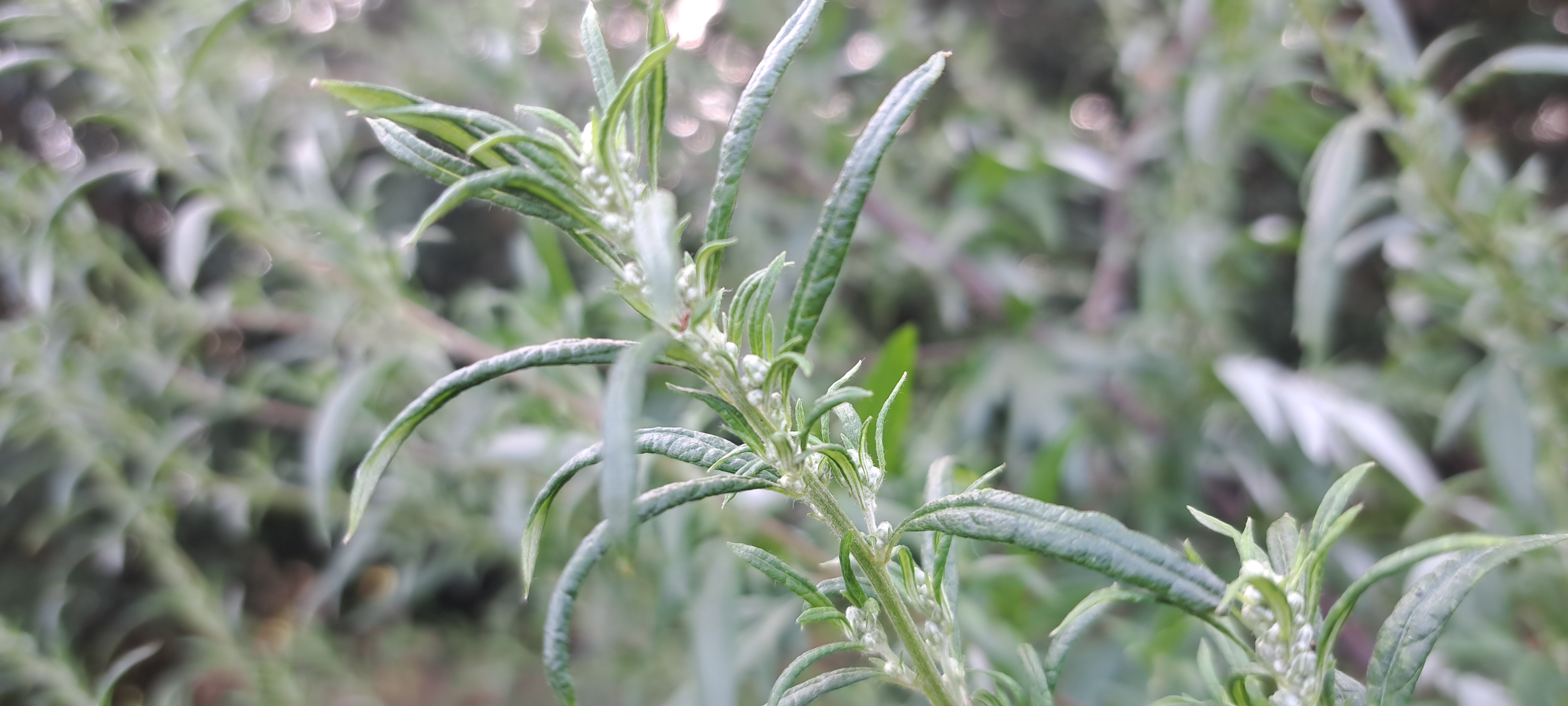
For a long time, I have been daydreaming of mugwort. I don’t even remember (no surprise there) when it crept so quietly into my thoughts, bringing me an unspoken message that it could help me. But I do remember sitting in Jenni’s bright beautiful kitchen in Galway and telling her about my interest in this plant that as yet I had not had the pleasure of encountering. Mugwort can help you dream, I remember saying, and I want to dream so I can improve my memory, but it’s elusive, I can’t find it anywhere.
I have some in my garden, she said, and sent me out to fetch some leaves. I came back grinning and clutching a few sprigs. I should have known Jenni’s bountiful garden would provide. It felt like some things are just meant to be. It also felt like an illicit experiment as we brewed mugwort tea and drank it ceremonially before going to bed. Jenni dreamed, but I did not. I went home and tried to forget about it, which should have been easy with my poor memory, but Mugwort did not want to be forgotten. It continued to dance through my thoughts all through the winter. I ordered a plant from Ivywood Nursery, and it arrived in April, a little sprig of a plant that I doubted would survive, because I had never found it growing naturally in my local landscape.
It is currently taller than me.
The mythology of mugwort
Mugwort takes its Latin name, Artemisia, from the Greek lunar goddess, Artemis, daugher of Leto and Zeus, and twin sister to Apollo. Artemis was born first, at night, hence her association with the moon, and she assisted as mid-wife to help her mother give birth to Apollo. This connection with midwifery and the moon links her with childbirth, mothers, and menstruation, and she was considered the patron of women throughout the different phases of life, including menopause.
Artemis was also goddess of the hunt, wilderness, and independent nature; she spurned marriage and sex in order to live a free life; thus, she is often associated with the ‘maiden’ phase of the neo-pagan concept ‘maid-mother-crone’. This independence and associations with wilderness and healing to my mind also connect her with the Cailleach, and in fact mugwort itself is sometimes referred to as ‘the old woman’.
Ireland does not have a moon deity, male or female, but sometimes Aine is suggested in that role, as her name is thought to mean ‘bright’. It is more than likely that this vague reference connects her with the sun, however, as she is said to be a goddess of summer and agriculture.
Instead, mugwort became associated with Saint John the baptist who carried it with him attached to his belt to protect him from evil in the wilderness. He was venerated with the lighting of bonfires at sunset on the eve of Midsummer’s day, 23rd of June, Oíche Fhéile Eoin (St. John’s Eve) in Irish, said to be his birthday. Celebrants would wear sprigs of mugwort in his honour, which they would then cast into the fire for protection.
Mater Herbarum – the Mother of Herbs
The classical name for Mugwort is Artemisia Vulgaris; this is the type that commonly grows in Ireland as a native plant. The Irish call it Mongach Meisce. Mongach means something that ‘has a mane’, or is ‘long-haired’ or ‘bushy’, while meisce means ‘in drink’ as in ‘drunkeness’ or ‘intoxication’. Mugwort stems are indeed abundantly bestowed with leaves, which could explain the reference to a mane, or bushy. The intoxication could refer to the plant’s ever so slight narcotic property, or, and this is more likely, when the ancient Celts used mugwort to flavour their beer, before they began using hops. Incdentally, the brewers were women, and the late John Wilmott has a wonderful series on the brewing women of old on his Nature Folklore Substack – START HERE. It’s well worth reading.
Historically, Mugwort was deemed the worthy title of Mater Herbarum for its effective treatment of female reproductive disorders, and for its regulation of the menstrual cycle. It was believed to ease birth and cleanse the womb. Nicholas Culpepper wrote of mugwort in his Complete Herbal in 1653 that “This is an herb of Venus. Its tops, leaves and flowers are full of virtue, they are aromatic, and most safe and excellent in female disorders.” 11
Mugwort was used to relax the nervous system, and as a remedy for palsy, fits, epilepsy and depression. According to Niall mac Coitir, in Ireland mugwort was burned and the smoke inhaled by patients. The smoke was also used to fumigate the sickroom. 12 Roman soldiers when marching were known to wrap mugwort around their feet to prevent soreness, and apparently this practice was carried into the seventeenth century, as botanist William Coles wrote in 1656, “if a footman take a mugwort and put it into his shoes in the morning, he may goe forty miles before noon and not be weary.” 13
In traditional herbalism, mugwort was used to treat digestive issues such as gastritis and gastric ulcers, to calm an irritable stomach and to stimulate appetite. It has strong anti-fungal, anti-microbial and anti-inflammatory properties that can be used externally for treating skin conditions like athlete’s foot and ringworm, sprains, bruises and even headaches. 14 Mugwort can also be used for repelling insects and detering moths from eating your clothes.
It seems mugwort really is the hard-working multi-tasking Mother of all herbs!
How I use Mugwort
I make an infusion using a handful of freshly picked young leaves, and let it steep for ten minutes. It produces a clean, delicate, refreshing aromatic cup of ‘tea’ that I drink before going to bed. Mugwort has a reputation for tasting very bitter, but I find this true only of dried leaves. When using dried leaves, I generally use less and combine them with some fresh sage and rosemary, both of which are also said to improve memory. Lemon balm is thought to be helpful for those who suffer from insomnia. A teaspoon of dried herbs per cup of boiling water is usually enough, but adjust according to taste. I am always a bit over-generous.
There are other ways of using mugwort. The ancient Chinese used it for moxibustion. It can be used as a smudge to remove negative energy from a room. It can be smoked, or burned as incense.
NB. The use of mugwort can cause side-effects. Its uterine stimulating effect has historically been used as an abortifacient, so do not risk using if pregnant or trying to become pregnant. Do not attempt moxibustion unless supervised by a trained and qualified practitioner. Mugwort contains small amounts of a compound called thujone which is a neurotoxin that could, in large amounts, cause spasms or liver damage. In normal every day use, its toxicity to humans is thought to be weak, but nevertheless, do your own research and exercise caution. Thujone is found in many other plants we regularly consume that come without safety warnings, such as oregano and sage, so let’s use our common sense.
It seems to me that when wild plants offer effective healing benfits, they are presented as potentially dangerous, with claims that not enough reasearch has been done to confirm their safety or effectiveness in humans. I find this strange; you’d imagine ‘big pharma’ would be all over them. I suspect the truth is that as ‘big pharma’ can’t control the spread of ‘weeds’, they don’t want us to know that we can heal ourselves for free from the plants growing wild and abundantly in nature. The system likes to keep us well enough to work, but just sick enough that we are dependent on their medicines so they can make money from us.
Think I’m cynical? Damn right. I’m a hag, so of course I’m cynical. Look at the state of the world. I refuse to participate. The knowledge of using herbs for health was violently stolen when the cailleacha were denounced as witches during the Enlightenment, so that our health could be controlled and monetised by male doctors with their newfangled ‘superior’ scientific synthetic drugs.
Relearning that lost knowledge is a quiet, grey-haired revolution.
Mugwort as Memory Medicine: Does it really work?
As I mentioned earlier, the first time I took mugwort, nothing happened. This did not surprise me. My body has always rebelled against intervention, and is particularly resistant to medicines and any other ‘weed’ recreatively used for relaxation and halucination.
But when I started to use it with intention, when I took care of the plant before I harvested its leaves, when I had researched and was more aware of its properties and benefits, when I asked permission before harvesting, and asked for its help before imbibing, well then things started to change. Sounds a bit ‘woo-woo’, I know, but really, it’s just showing respect and common decency to another living entity. It’s how we should treat all living beings, not just other humans. I switched my sleep app back on to see if it recorded any changes.
And yes, it works, but I guess it depends on what you ask of it. I asked only for a dream, because I want to boost mental recovery, and that requires REM. That night, I had a dream. In that dream, I helped another person with herbalism. It wasn’t vivid, and I couldn’t recall it all, but I could remember elements of it when I awoke. Also, for the first time in ages, I awoke clear-headed instead of groggy.
When I consulted my sleep app, I found that I had achieved 21% of my total sleep time in the REM state, and a whopping 17% in deep sleep! For me, that is a RESULT.
The increase in deep sleep was a bonus I did not ask for and never imagined. At best, in three years of using the app to monitor my sleep, I was lucky to touch on 10% now and again. My REM was always rock-bottom low. The absence of brain fog on waking was also a welcome bonus. And I can confirm that mugwort also works on the digestive system, another unexpected gift.
But was it just coincidence? Manifestation, perhaps. It’s hard to say with certainty, but I hopefully repeated the process the next night.
This time, I had a rotten night’s sleep, struggled to drift off for two hours, then woke up at 5am. My app confirmed that I had not met any sleep goals. But… I had a dream, and could remember all of it. It was about being lost and unable to find my way, about losing things, and losing and finding and losing again old friendships. The following night was better; I achieved a whole 22% of REM, and and 17% deep sleep, and my dream was about failing to update data systems, and I could remember all of it, even down to the name of the new data system, ‘Elvarez’… does that mean anything to anyone? Anyway, if that is not a reference to my failing memory, I don’t know what is.
It’s very early days in this new process of self-treatment and discovery, but so far it seems to be working. Whether my memory improves remains to be seen, but I hope so. I had feared that my memory loss and weird word loss were the first signs of dementia. Now I know they are common symptoms of my declining hormones. None the less, it is deeply distressing. As a writer, the wielding of words is integral to my identity, and as a memoirist, having a good memory is pretty crucial. Not only that, but as I move into my hag years I want to be able to remember the events of my young life with clarity, my sons’ childhoods, the faces and smiles and voices of the older adults I love who, inevitably, one by one, are beginning to move on. I want my memory to be an effective tool I can rely on. I want to learn to love my memory for the wonder it can do for me.
This Lughnasadh, I give thanks for my harvest of mugwort, and the dreams it has given me, and am hopeful that it may provide the key to unlocking the potential of a vibrant remembering.
Do you use mugwort? If so, how? Do you find it helpful? Please open up the conversation in the comments below, leave me a ‘like’, and share with like-minded hags. Thanks for reading! And if you’re new here, but like what you see, why not subscribe? Its entirely human-created, free, and always will be.
Grá mór,


PLEASE NOTE: I am not a trained or qualified herbalist. I make no recommendations or diagnoses. I grow and use herbs for my own needs, and share my thoughts and experiences here. Do your own research. What works for one person might not work for another. If you know you are allergic to any particular plant and/or plant family, do not use it. If you are pregnant, or trying to get pregnant, or breastfeeding, do not use herbs unless you have been advised to by a qualified medical practitioner. Do not give to children or weak, sick or elderly people, or anyone with any serious medical condition unless advised by a qualified medical practitioner. Do not stop taking any medication or treatment, or attempt to replace a medication or treatment with herbs unless advised by a qualified medical practioner. Just because a herb is natural does not mean it is harmless.
Dream, Wikipedia. I know, I know, but it is a long and interesting article that provides a lot of useful sources for further investigation.
See ref. [4] above.
Samsung Health app, sleep function.
Dr. Louise Newson, Balance app. I have learned so much from this amazing, wonderful woman. Search and follow her on Instagram if you want to learn more, or download the Balance app, its free. She also has a podcast. She also advises that testosterone should be given to women in peri- and menopause for maintaining muscle mass, regulating libido, aiding mental focus, concentration and energy levels.
Qtd in: Christine Iverson. “The Hedgerow Apothecary – Recipes, Remedies and Rituals”, Summersdale Publishers Ltd., an Hachette Uk Company, 2019, p.119.
Niall mac Coitir. “Ireland’s Wild Plants – Myths, Legends and Folklore”, The Collins Press, 2006, p. 117.
See 11 above.


Hey… let's talk!