Also known as ‘the rough month of the cuckoo’
You’ve heard of El Nino, the Gulf Stream, and the North Atlantic Drift, well-known ocean currents that bring with them particular weather characteristics.
You may also have heard of the Diablo, the Mistral, and the Sirocco, winds famed for blowing across California, and the Mediterranean. We’re all very aware of the naming system given to storms by today’s meterologists.
But have you ever heard of the Scairbhín?
Pronounced ska-ra-veen, this is the name given to a unique Irish weather phenomenon that takes place during the last fortnight of April and the first fortnight of May. It is thought to derive from the Irish phrase, garbh mi na gcuach, and means something like ‘the rough month of the cuckoo’.
This four week period of Ireland’s natural calender is often characterised by extreme and seemingly illogical fluctuations of weather. It is not unknown to have mild sunny days followed by storms and flooding, hailstones, or even snow.
This is no exaggeration: I have experienced it many times myself. Snow in May? Not unheard of. In Ireland, we say you can expect to experience all four seasons in one day, and this is certainly true of the Scarbhín.
Our ancient ancestors who worked the land and were much closer to the seasons knew this as ‘the hungry time’ of the year. This is because in the spring, they were busy planting their crops. In May and June, as their stockpile of food from the previous year’s harvest was running low, they would see the results of their labour in the growth of new crops that were as yet too young and immature to produce food.
The Scairbhín sounds incredibly destructive, and sometimes, it can be. Last year, the early budding of flowers on my apple trees were destroyed by strong winds, and we had very few apples that year. I left what there were on the trees for the birds and the wasps.
Another year saw a cold snap kill off all the midges. You’d think that was a good thing, but I learned that midges are a food source for wasps. As a result, we had very few wasps. You might think that’s another good thing, but wasps are incredibly important to the ecosystem.
Although the adults only eat sugars, they kill a lot of spiders and bugs like greenfly which they feed to their larvae, and generally keep my garden midge free. Thank you, wasps. 1
However, the Scairbhín often acted as nature’s way of ensuring the crops success. Early ‘unseasonal’ warm weather would prompt seeds to germinate, a sudden cold blast would then serve to ‘harden off’ the young plants, and the winds that followed would distribute pollen. Sounds like Mother Nature (AKA the Cailleach) has thought of everything, right?
But what does any of this have to do with cuckoos?

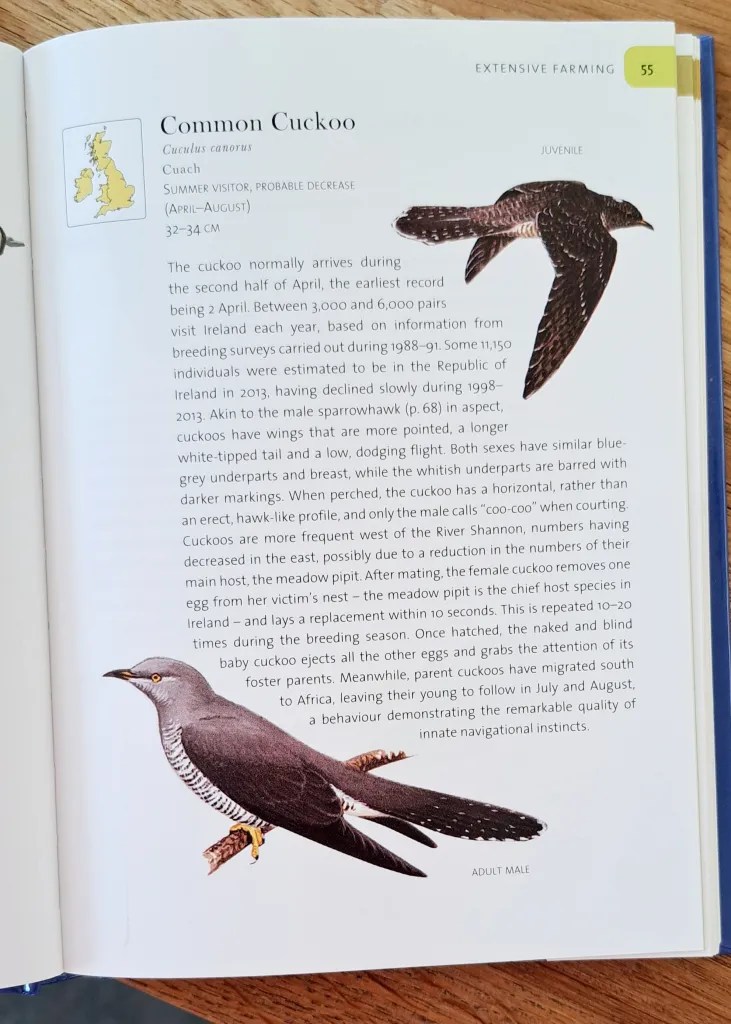
Well, the Scairbhín coincided with the return of the cuckoo. The cuckoo, cuach in Irish, is not a native bird in Ireland, but visits for the summer to breed. The call of the cuckoo is often heard when the bird itself cannot be seen, which lends it an air of mystique. It was therefore seen as something of a herald of early spring and the milder weather that was surely to come.
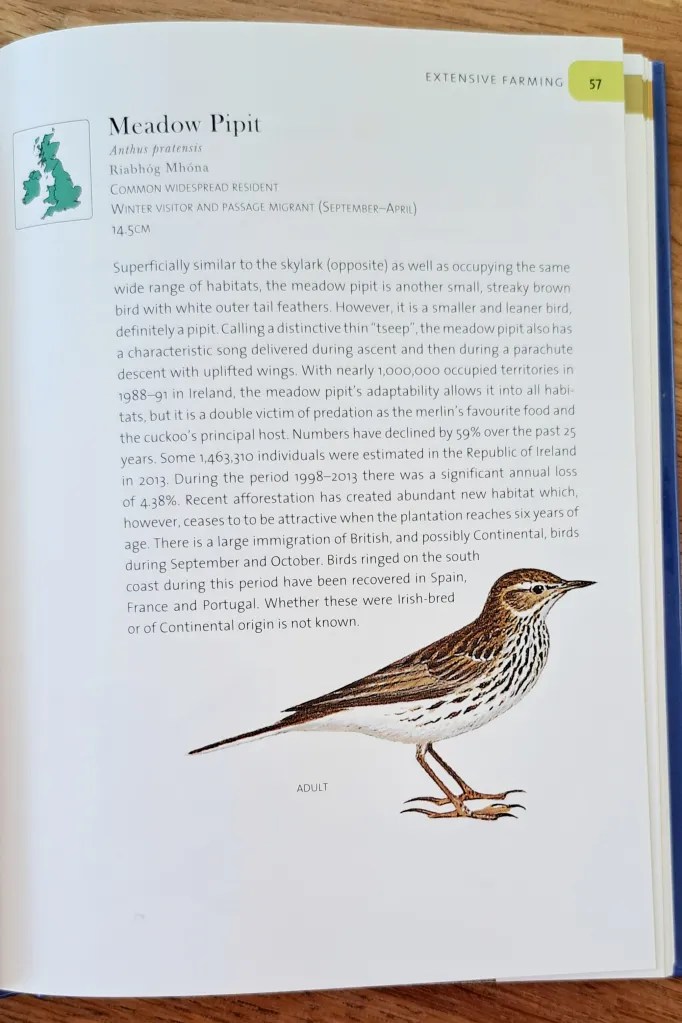
I have often heard cuckoos call, but had never seen one until I had a strange encounter whilst out hiking in Co. Clare a few years back with my friend, Jenni. As you know, cuckoos don’t rear their own young, but lay their eggs in the nest of some other unsuspecting bird couple. In Ireland, according to BirdWatch Ireland, their main host species is the Meadow Pippit. 2
We walked into the centre of an aerial battle between a breeding pair of birds and a cuckoo, which they succeeded in chasing off. They must have caught her trying to lay an egg in their nest, or even worse, eating their young.
Of course, the Irish have quite a store of cuckoo lore. It was considered lucky to hear its call whilst out walking, but if you were to hear it whilst lying in your bed, you were sure to experience illness in the family before the cuckoo departed Irish shores for the winter.
If you heard the call while you had no money in your pocket, you were likely to remain poor for the rest of the year. So that explains it – I hear cuckoos most often whilst out walking the lanes around my house, at which time my pckets are usually empty, unless I’m going for eggs. Maybe we should all keep a coin in our pockets, just in case!
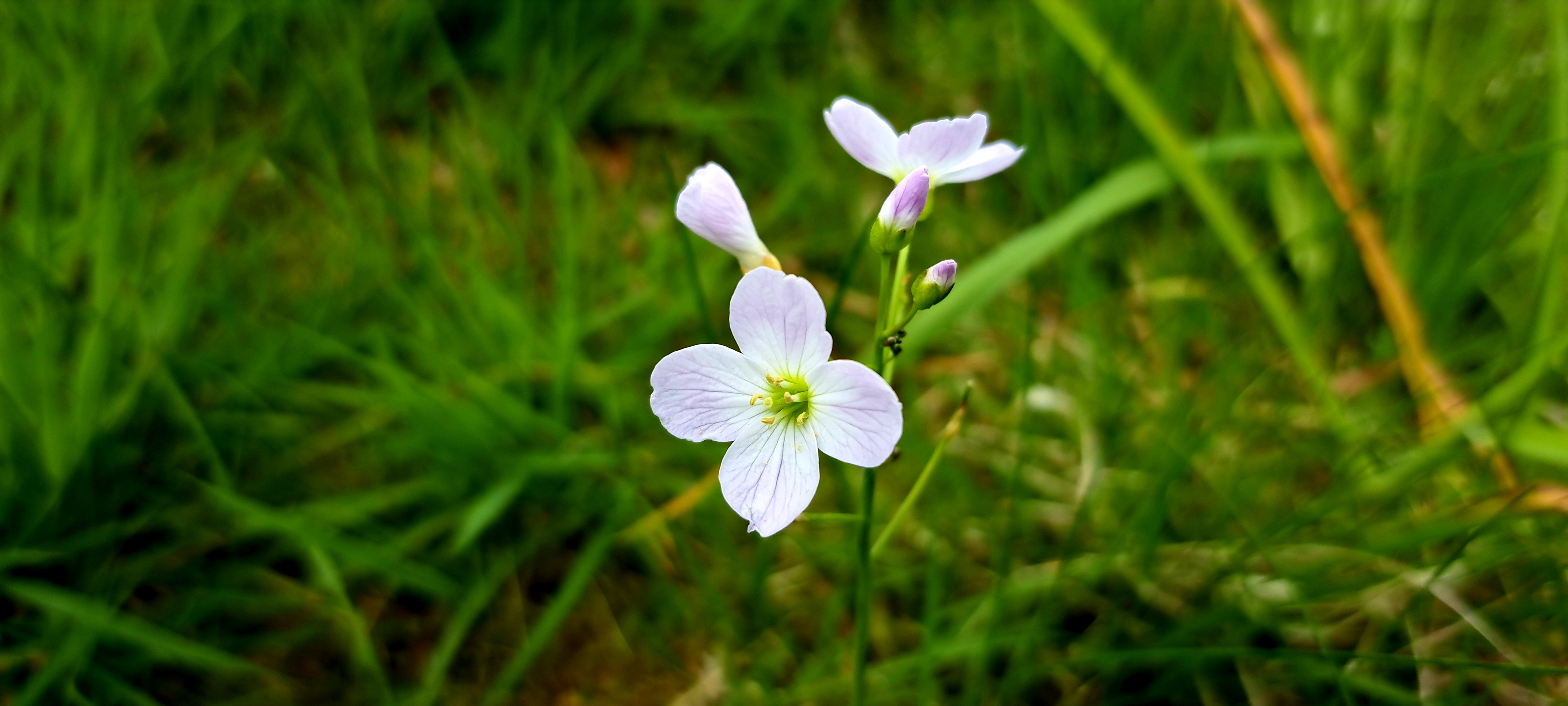
It was in the middle of the Scairbhín period that I first came across the cuckoo flower, in Irish biolar gréagháin. It was growing unassumingly in my wild garden, and as the years have passed it has dramatically increased. It is a native plant in Ireland, and is apparently a sign of a healthy ecosystem. According to Wildflowers of Ireland, it is a larval food plant of the Orange-tip butterfly. 3
These flower for the most part in April and May when the Cuckoo begins to sing her pleasant notes without stammering 4
Wildflowers of Ireland
The scairbhín is a weather phenomenon that affects the land and all that grows and lives upon it. If you have read any of Manchán Magan’s books, 5 you will know that the Irish language is intimately connected with the land. As such, it will come as no surprise to learn that there are places in Ireland that have acquired their names through their connections to the weather.
One of my favourites is Macha an tSamraidh, a townland in Co Kerry; it means ‘the cattle-fold of Summer’. 6 Closer to home is Droim Samhraidh near Oldcastle in Co Meath, which means ‘Summerbank’, and is associated with a little-known saint named Morónóg, who founded a church there. His feast-day is on 22nd July.
In Irish mythology, Tir na tSamraidh means ‘Land of Summer’, and is the name of one of the Otherworld lands. Maybe these places in the mortal realm were thought of as little pockets of heaven on earth.
Cnoc Firinne in Co Limerick means ‘Hill of Truth’, and is so named for the accurate weather predictions made on it over the millennia, based on cloud cover and formation, visibility, and such like. In folklore, the hill is also the home of Donn, King of the Dead. 7
Finally, Duchas has an entry in its Schools Collection that records a placename associated with the cuckoo. It was collected by schoolgirl, Maggie Kinsella from a woman named Mrs. M. Kirwan in Co Wexford. 8
Unfortunately, it does not appear to be dated, but this project took place in the 1930s in an attempt to record Ireland’s oral tradition and knowledge of the old ways, which were in danger of being lost.

It reads:
“The Cuckoo’s Nest is another name given to a place in this locality. It is also on the Gorey – Carnew road. It is south-east of the school. It is a very sheltery place and the sun is nearly always shining there. It was probably called the Cuckoo’s nest because she is generally heard around there a few days earlier than any other place. Long ago people used to think that the cuckoo built her nest there, but now we know that the cuckoo builds no nest.”
Thank you for reading! If you’d like more myths, more landscape and plant lore, why not subscribe? It’s free, and always will be. Please leave me a comment, I’d love to know if you have any local lore like this where you live. And please remember to like and share!

CITATIONS
According to the Natural History Museum, in the UK, each summer, social wasps in the UK capture an estimated 14 million kilogrammes of insect prey! Imagine what 14 million kgs of insects look like… I for one am very grateful for the work wasps do!
ibid.
The literary wisdom of Manchán Magan. He also now has a Substack, where you can keep updated with his work.


Hey… let's talk!