On mothering our children and the land.
It’s 4am on a Sunday morning. I’ve been awake for an hour, and I’ve enough experience of this now to know I can’t fight it. So here I sit in my dark-dappled kitchen, cup of fennel tea on my right, phone and Braiding Sweetgrass on my left. I light a candle; I have been lighting a lot of candles lately, a way, perhaps, of bringing some light into the darkness that is spreading across the planet, a vigil for hope. With that tender flame flickering, I am ready to spin a web of thoughts into some kind of coherence.
In my last post, Moving Between Worlds, I found myself in freefall, words I had not intended to write spilling onto the page. And so it is again. In the context of the wider world, there is escalating loss and death, and although it is far removed from me in terms of geography, as a mother and a human being, I still feel the weight and grief of it.
In recent weeks, death moved a little closer, creeping into the periphery of my family. Grief is a variation of suffering, and we feel grief for all kinds of reasons, not just the loss of loved ones.
Yesterday, my son left for work in the morning as normal. Five minutes later, his car skidded on a patch of mud on the narrow country lane where I regularly walk on my daily wanderings. He turned towards the hedge in an attempt to avoid the mother driving towards him with her two young children in the back. His tyre gouged into the embankment as the car came to a stop, resting precariously on just two wheels, and then, slowly, it toppled onto its roof.
He did not hit the car with the mother and the children in it. They are all alive and well, if a little traumatised. When I saw the car later, resting partly on its roof, partly on its windscreen, I wondered how anyone in the front seat could have escaped unscathed.
That road is quiet, which is one of the reasons I like to walk there. It is narrow and hilly, the hedges rising from steep embankments on either side with no hard shoulder. If you meet a tractor, there are few passing places, all of which means not many drivers choose to travel that way.
And yet there were a surprising number of witnesses to the accident who said my son was driving safely at a reasonable speed. One woman said he regularly passes her on the road and always drives safely and slowly. Young men have a reputation in Ireland for reckless driving, so although I trust my son, it was reassuring to hear this from the mouths of strangers.
When I bought my car in the late summer of 2016, I never imagined it might at some point in the future endanger my son’s life. But it also saved him. Its strong shell absorbed all the damage, keeping his soft human form unharmed. I am grateful for that.
I feel for all the mothers in the Ukraine, in Palestine and Israel, and in all the other parts of the world where there is conflict. They are all human, doing their best to keep their children alive. I’m sure all they want is for their children to grow up in peace and safety. I once would have accepted that as the norm, not a privilege.
Winter is coming
A line I will forever associate with Game of Thrones. But every year, it happens IRL. We’re rapidly coming into November, a time when I am normally filled with dread for what is to come during the cold, dark months.
My year with the Cailleach has been significant in many ways, notably in bringing me closer to the land and nature, but also, it has been monumentally instrumental in developing an acceptance of winter. It might seem sad and pathetic to some, but fear of winter is real; it’s called Seasonal Affective Disorder, and it affects up to 3% of the general population. 1
An elder woman and her foraged elderberries
You may remember that I collected some elderberries, but as there is only one elder tree in my local area, I only managed to obtain a couple of handfuls of berries. I would have liked to make an elderberry syrup, as it’s meant to be very healing for winter coughs and colds, but I didn’t have enough. So I decided to make elderberry gin. I chucked the berries in a jar of gin with a squeeze of lemon and a slice of lemon peel and left it to infuse.


After about 4 weeks, I removed the rind and berries, keeping the berries to add to gravy for our next roast dinner. I made a (not very) sweet solution by heating 2 tablespoons of golden erythritol, as it’s kinder to teeth than sugar, in 200mls of water.
Once dissolved, I left it to cool, then added it to the elderberry gin, one spoonful at a time, tasting after each addition. I added 5 tablespoons… I don’t like sweet drinks, and this just took off the tart edge the berries added. I drank it as I normally do, with ice and slimline tonic.
So… what was it like?
It had a lovely floral scent, and added depth to the botanical flavour of the gin, and the colour was amazing. All in all, it was a very enjoyable, refreshing drink. I’ll definitely make it again, and am now thinking of adding elder trees to my garden.

Root and branch
A few weeks ago, I took a branch from one of my Guelder Rose bushes to display in my kitchen in a red vase, because it had such gorgeous clusters of red berries on it. When the leaves started to fall, I though it was ready for composting. However, when I lifted it from the vase, I found the branch had sprouted roots! This plant really wanted to live!
It had given me weeks of beauty and pleasure by decorating my home, now it was my turn to give it the new lease of life it deserved. I thought about Robin Wall Kimmerer’s theory of reciprocity, and found it a place to live in my garden. I hope it takes root and thrives.


Going bonkers over conkers
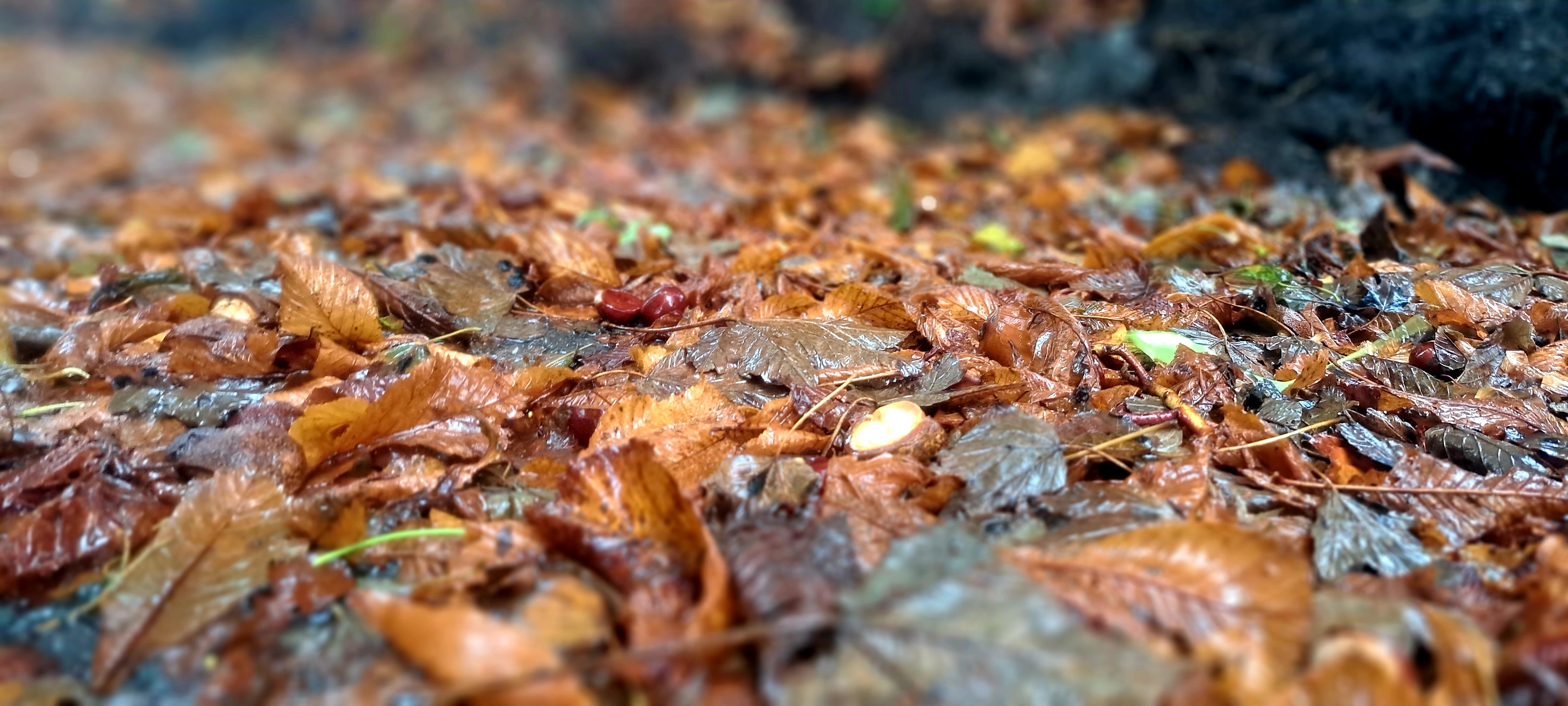
It’s the season for them, they litter the ground on one section of my local 5k walk, and children don’t seem to play with them like we all used to when I was a kid. I love them, they’re so shiny and tactile.
I decided to use them to make a natural detergent for washing clothes. The simplest way to do this is to follow the method used by Nancy Birtwhistle, author of a book called Clean and Green: 101 hints and tips for a more eco-friendly home.
This is how I made my conker detergent. 10 conkers should be enough to make a litre of laundry detergent, but my conkers were on the small side, so I added less water. After it is made, keep it in the fridge. You can collect conkers and store them in the freezer. This also makes it easy to peel off the brown skin. I have a drawer full of them in my freezer.

First, I froze the conkers overnight; this is a really important part of the process. Once thawed, I chopped the conkers and was able to peel off the brown skin, leaving just the white flesh © Ali Isaac 
You can see the white flesh of the conker with skin removed in this image; it looks a lot like a clove of garlic © Ali Isaac 
The chopped up conkers are now ready to be steeped in boiling water © Ali Isaac 
The conkers steeping in the boiling water. I left them till the water went cool © Ali Isaac 
I strained the cooled liquid into a jar, then added a little more boiling water to the softened conkers, blended them into a puree, then added that to the jar of liquid. You can see suds forming in the jug © Ali Isaac 
The finished product. I added a few drops of pink grapefruit essential oil for scent © Ali Isaac
The liquid smelled a bit like canned peas to me, but it was faint, and I doubt the clothes would have come out of the wash smelling of peas. I wanted a little bit of scent though, so I added a few drops of essential oil.
You will need a sharp knife, so please be careful if you try this. Also, be aware that conkers are poisonous to dogs and cats, and they are very mildly toxic to humans too, possibly causing stomach ache if ingested, so I wouldn’t advise this as an activity to do with children, although collecting the conkers on an autumn walk would be a lovely thing to do together.
But does it work?
YES!
I washed all our clothes for a week before my detergent ran out. I washed Carys’s school uniforms with all their spills and dribble, her sleeping bag which her nappy had leaked on overnight, the boys’ sweaty gym kits, towels, and mine and Conor’s clothes. Everything came out clean and smelling fresh. One thing I particularly noticed was how soft the clothes were, and that is without fabric softener or any other additives.
How does it work? In a similar way to soap nuts, but please think twice about using soap nuts, bulk harvesting for western markets has made them unavailable or too expensive for local people to use in the countries where they come from, such as India and Nepal, never mind the air miles.
Conkers contain saponins, which are “naturally occurring compounds… widely distributed in all cells of legume plants. Saponins… derive their name from their ability to form stable, soaplike foams in aqueous solutions”. 2
Apparently, you can wash your skin and hair with it too. I didn’t try this, but it worked really well on cleaning my work surfaces when I accidentally spilled some.
I did not see any actual soap suds in my washing machine, but my washing looked and smelled clean, and that’s good enough for me. You can add some bicarbonate of soda or washing soda for extra power, if you like, and white vinegar added to the rinse cycle will soften and deal with any remaining bacteria, moulds, or smells, if you find you have any.
A gift of conkers freely given, so easily transformed into something useful to humans, and kind to the land, to the water, to all the creatures that inhabit both… what’s not to love? That is Kimmerer’s reciprocity, right there.

My friend Jenni Maguire is featured on This Old Tree Podcast
Finally, a third gift! I have mentioned my friend Jenni many, many times since I first started blogging back in 2012. Jenni was (is) an amazing artist who has re-invented herself more times than Madonna, I think! I am always in awe of her knowledge and skills, and she inspires me daily. Jenni is particularly knowledgeable on lichens, and as she began moving into her H A G years, she re-trained as a park ranger. Previously, she worked as Head Guide at Coole Park, County Galway, home of the famous Irish dramatist, folklorist, writer and theatre manager, Lady Gregory, where she was interviewed for This Old Tree podcast by Doug Still, a consulting arborist and urban forester. You can listen here:
This episode is called The Autograph Tree, and it has a lovely history. Also, Jenni is brilliant. Enjoy!


Hey… let's talk!